
Your Source for Industrial Automation News
Insights & Updates
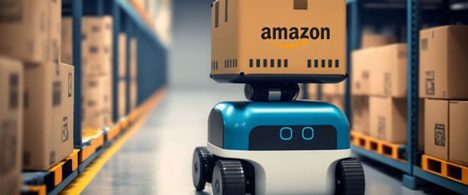
Amazon has transformed its warehouse operations by using advanced robotics and automation. The journey began with its 2012 acquisition of Kiva Systems, whose small mobile robots now move entire shelves to workers, saving time and reducing labor. Today, Amazon Robotics manages over 200,000 robots across its global network. These include robotic arms that pick and sort items, autonomous systems that handle repetitive tasks, and even drones being tested for fast deliveries. These technologies help Amazon process millions of orders quickly and accurately while reducing costs and human strain.
Robots in Amazon’s warehouses handle tasks like item retrieval, sorting, inventory scanning, and transport. When a customer places an order, a robot fetches the right shelf and brings it to a human picker, who selects the product. The robot then returns the shelf for future use. Algorithms guide the robots on the most efficient paths, helping speed up operations. Robots also manage inventory levels, track products with sensors, and help minimize human labor for routine tasks, allowing workers to focus on more strategic or delicate jobs.
The impact of robotics on Amazon’s fulfillment centers is significant. It boosts speed and accuracy, lowers operational costs, and enhances warehouse safety. During busy seasons, Amazon can scale quickly by deploying more robots instead of hiring more staff. Automation has not replaced workers but rather works alongside them to create a more efficient, flexible, and safe environment. As Amazon continues to develop smarter robots and AI systems, its logistics network is expected to become even faster, more accurate, and more sustainable, setting new standards in global e-commerce.